Welcome to your online Isshinryu Karate resource! Master Stephen Lage began his training in Isshinryu Karate
in 1982 in the Detroit suburb of Warren, Michigan. For an in-depth martial arts resume, click on Master Stephen Lage.
There are a vast number of methods of martial arts, all of which are good. Each method is derived from their region of origin.
For example, Kung Fu was developed in China. Tae Kwon Do was developed in Korea. Judo was developed in Japan.
The martial art of Karate was developed in Okinawa. The word "Karate" translates to "Empty Hand."
In the method of Karate, there are many different styles. The style of Isshinryu was officially introduced in 1956, by Master Tatsuo Shimabuku.
There is nothing flashy about Isshinryu Karate. It utilizes straight forward, but devastating Self-Defense techniques designed
to be performed under real-life conditions from natural stances.
With continued training and dedication, you have the potential to build your confidence, awareness, and discipline
to be able to protect yourself, as well as transforming yourself into a better, well-rounded individual.
Kuro-Obi
Each Belt Test that you will go through on your martial arts journey gets progressively more difficult with the amount of knowledge
and skill needed to pass. Each test puts you one step closer to achieving your goal of Black Belt – Kuro-Obi.
For the Karate-ka (Student of Karate), the Black Belt test is considered the most challenging, difficult and exhausting
of all tests. To pass this test, you must demonstrate the physical techniques necessary, plus the knowledge of Karate history, traditions,
past masters of the arts, creeds, codes, and so much more. With determination and perseverance, you can build your mind and body to the point
where you can demonstrate these qualities with very nice proficiency and earn the rank of Black Belt.
But somewhere along your journey, hopefully you go through a transformation where you realize that there is more to what you are doing
than a pretty Kata, scoring some quick points in Kumite, and reading all of the handouts, manuals and books. The dedication, passion,
and desire to attain perfection in the techniques you learn gets applied to how you live your life. Everything you do is looked at with
that same dedication, passion and desire for perfection. You begin to hold yourself to a higher standard. You strive to do the right thing,
ALWAYS. Not just when other people are watching. With that, you BECOME a Black Belt.
You can EARN your Black Belt, something you will have every right to be proud of. But only you will know if you have BECOME a Black Belt.








Isshinryu Karate Classes
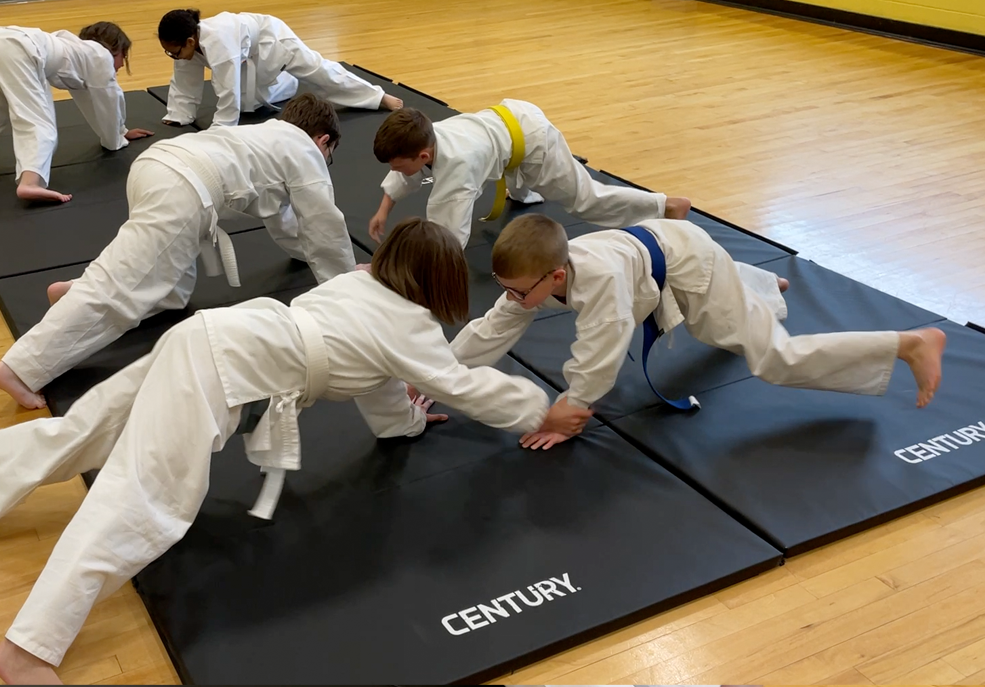
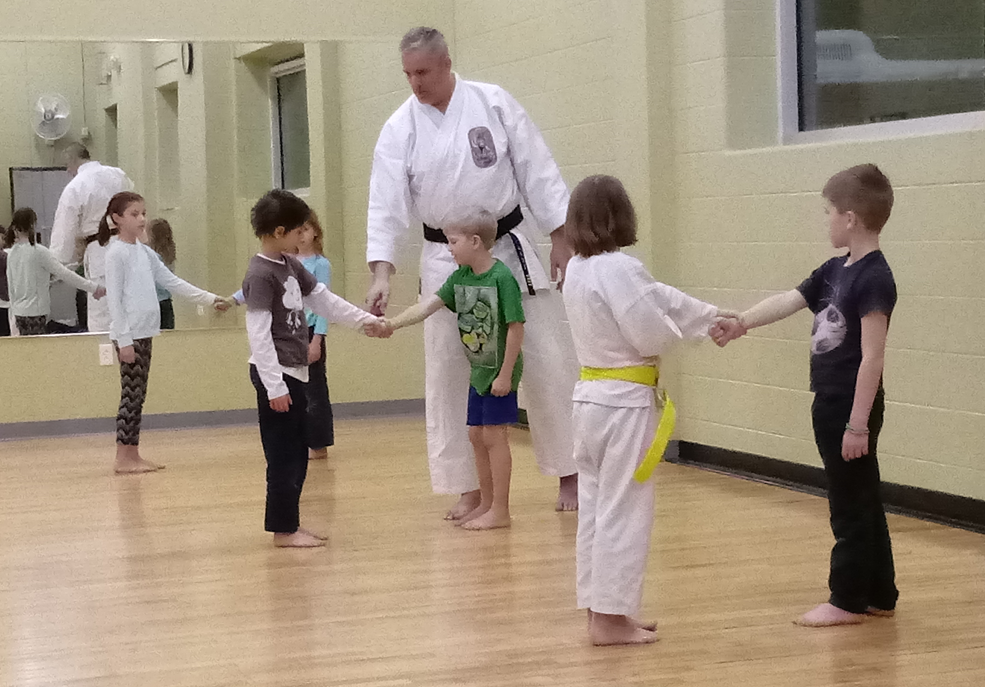
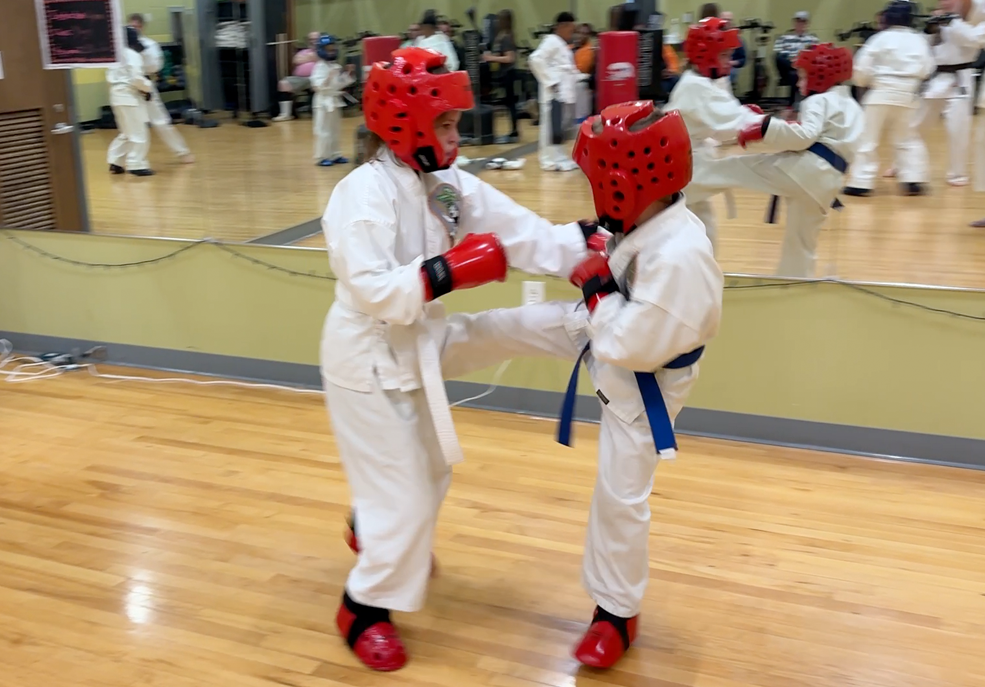
Classes for Adults (ages 12 and up), Little Dragons (ages 7-12), and Mini Dragons (ages 5-7) are currently held at the
YMCA of Greater Michiana. Even though the classes are an ongoing, continuous program, the YMCA offers a
session-by-session rate, correlating to the seasons of the year. Beginning students should sign up at the beginning
of a session. Advanced students continue to register for the advanced class each session. Please contact the
YMCA of Greater Michiana for the exact session schedule (start dates, session length, pricing).
The YMCA of Greater Michiana | 3665 Hollywood Road | St. Joseph, MI 49085 | 269-428-YMCA (9622) | ymcagm.org
Seminars
Master Stephen Lage offers Self-Defense Seminars for Women, Schools and Businesses, Weapons Techniques as well as Private Lessons.
Not only does Master Lage offer Seminars, he also attends them to further broaden his knowledge.
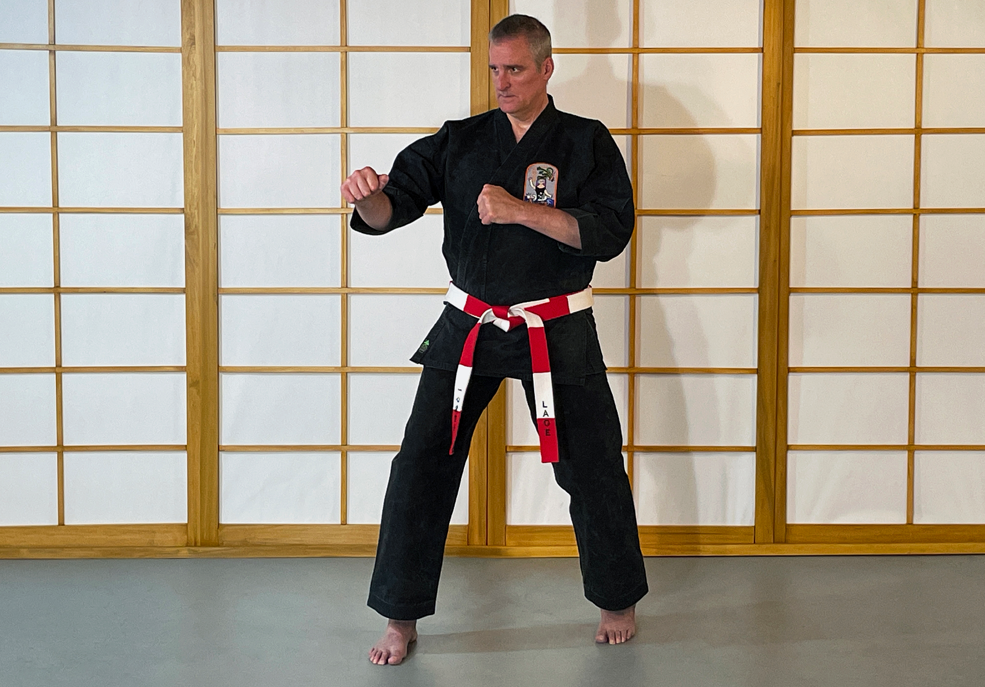
Master Stephen Lage

Stephen Lage began his training in Isshinryu Karate in 1982 in the Detroit suburb of Warren, MI. Throughout his training, Lage diligently
honed and excelled not only at the requirements for each rank, but many advanced techniques, realistic street Self-Defense,
and tournament competition, as well as Karate history and Okinawan traditions.
Lage attained the rank of Sho Dan (1st Degree Black Belt) in 1989. He began teaching classes
in 1996. In 2008, he moved to St. Joseph, Michigan, where he established adult and children's
classes at the local YMCA as well as Self-Sefense seminars both at the Y and
local businesses and groups. In 2023, he was promoted to Roku Dan (6th Degree Black Belt - Master Rank).
Throughout his martial arts career, he has met and/or trained with Isshinryu notables including
Angi Uezu (Son-in-law of the founder of Isshinryu Karate), Steve Armstrong (1st Generation student
of the founder of Isshinryu Karate), Ken Pittaway, Robert White, Toby Cooling, John Hoffmire,
John Devine, Norbert Donnelly, William Pogue, and Albert Mady. Outside of Isshinryu, he has had the
opportunity to study with Peter Carbone, Brian "Buzz" Smith (Kuntaw, a Phillipino art with a focus
on weapons and stick fighting), and John Hutchcroft (Seito Shorin-Ryu).
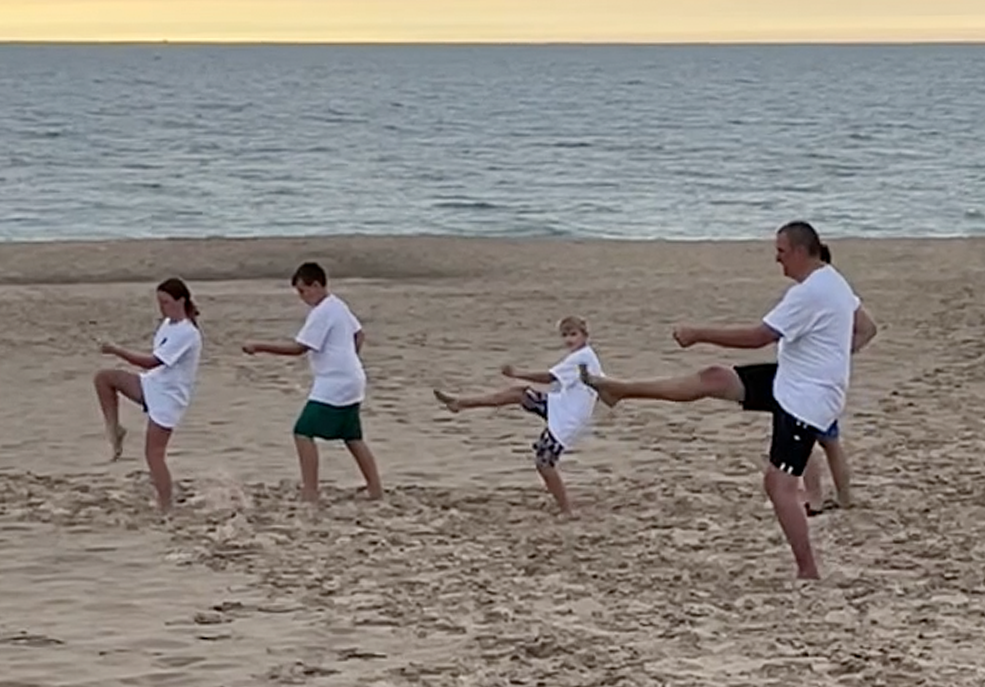
His class curriculum includes refining basics, cardio/bag drills, advanced/alternate Self-Defense techniques, Kata, Bunkai,
body conditioning, outdoor, beach, and snow workouts, etc.
Recent Tournament Experience:
1st Place, Senior Black Belt Forms: Great Lakes All-Star Open Karate Championships; Grand Rapids, MI (October 2012)
2nd Place, Senior Black Belt Forms; 3rd Place, Black Belt Forms: 40th Annual Grand Rapids Open; Grand Rapids, MI (March 2013)
4th Place, Senior Black Belt Forms: Western Michigan Karate Championships; Holland, MI (April 2013)
1st Place, Senior Black Belt Forms; 2nd Place, Black Belt Forms: Mid Summer Madness Open; Grand Rapids, MI (July 2013)
1st Place, Senior Black Belt Forms: 41st Annual Grand Rapids Open Tournament; Grand Rapids, MI (March 2014)
4th Place, 35 & Over Black Belt Traditional Forms: 9th Annual Metro Detroit Open Karate Tournament; Canton, MI (May 2014)
1st Place, Senior Black Belt Forms: Western Michigan Karate Championships; Holland, MI (May 2015)
Gold Medal, Senior Black Belt Forms: Meijer State Games of Michigan (Winter Games); Grand Rapids, MI (February 2016)
Gold Medal, Senior Black Belt Forms: Meijer State Games of Michigan (Winter Games); Grand Rapids, MI (February 2017)
Gold Medal, Senior Black Belt Forms: Meijer State Games of Michigan (Winter Games); Grand Rapids, MI (February 2018)
2nd Place, 4th Dan & Up Weapons Forms; 4th Place, 4th Dan & Up Forms: Lions Karate "Best of the Best" Karate Tournament; Syracuse, IN (March 2018)
1st Place, 4th Dan & Up Weapons Forms; 2nd Place, 4th Dan & Up Forms: Lions Karate "Best of the Best" Karate Tournament; Syracuse, IN (March 2019)
Silver Medal, Senior Black Belt Weapons Forms; Bronze Medal, Senior Black Belt Forms: Meijer State Games of Michigan (Winter Games) Grand Rapids, MI (February 2020)
4th Place, 3rd to 5th Dan Weapons Forms: KIAI Isshinryu Grand Nationals Karate Tournament; Southfield, MI (June 2021)
The Kata of Isshinryu Karate
The following is a walk through of some of the Kata of Isshinryu Karate to help the Karate-Ka with their at-home practice.